
Department 02 — of 07
Science.
Evidence first. Storm King science is the discipline of asking better questions — then finding out.
Overview
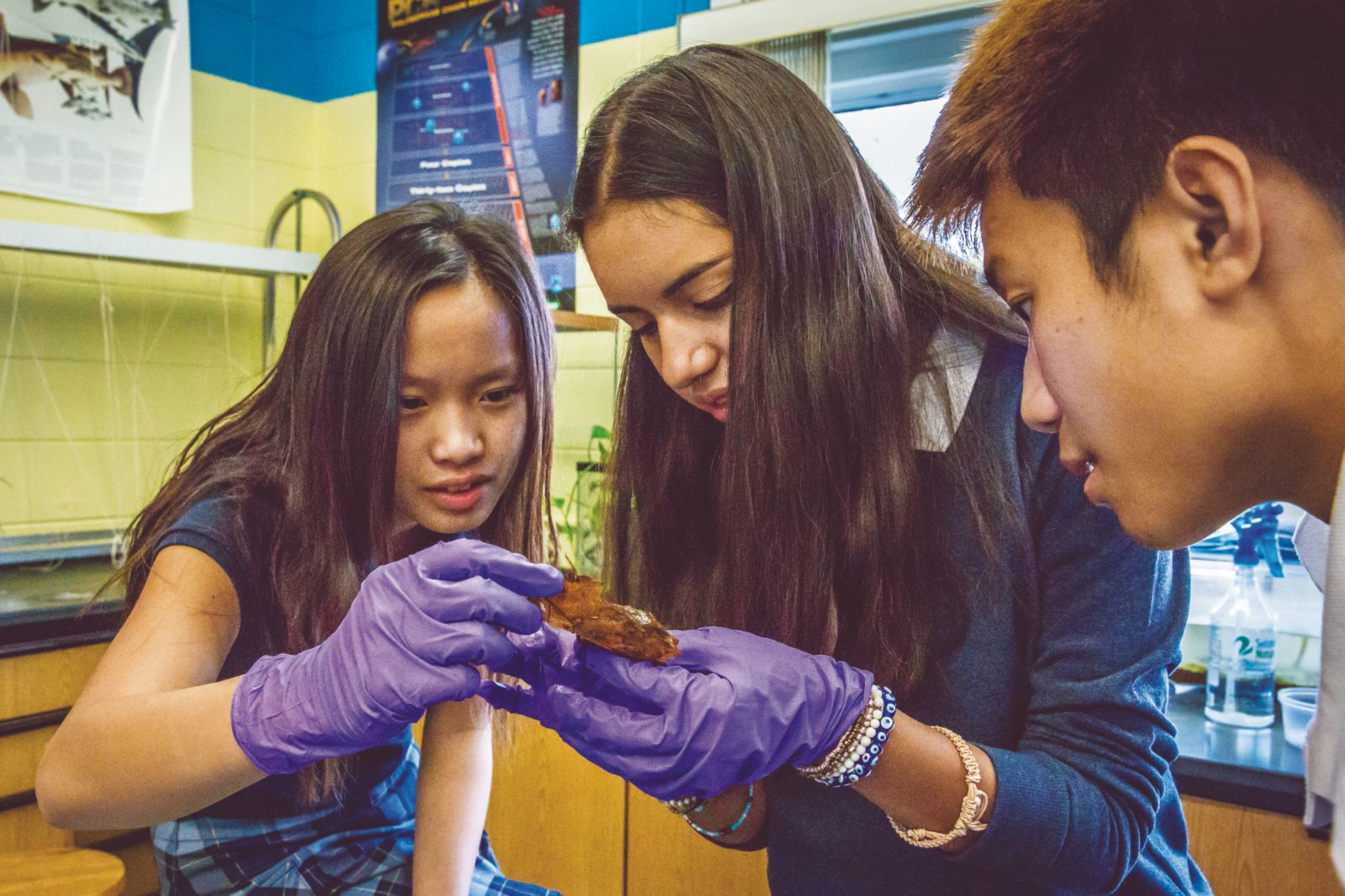
Science at Storm King begins with a question and ends with evidence. From first-year physics to AP Biology, students learn to work the way scientists actually work: observe closely, measure carefully, build a model, and defend it in front of your peers. The program is aligned with the Next Generation Science Standards and taught by faculty who have done the work themselves — in research labs, observatories, classrooms on three continents, and industry. The destination is real: higher education, STEM careers, and the kind of informed citizenship a data-driven world demands.
AP courses follow syllabi approved by the College Board, covering the established skills and content that prepare students for their exams. Everything else follows curiosity.
Courses
Middle School Science Grade 8
The curriculum for the eighth grade science class draws from the collection of fields traditionally known as ‘Earth Science.’ The topics range from geology, meteorology, and oceanography to astronomy. In this class, students explore the complexity of Earth’s structure and how its properties work together to sustain life.
Introductory Physics
In Freshman Physics, students are introduced to the fundamentals of physical science and the natural world using age-appropriate mathematical tools. Topics include measurement, kinematics, forces, momentum, energy, electricity and magnetism, gravity, and more as time permits. In addition to learning about these areas of physics, students are guided to develop their skills in experimental design, analysis, and reflection, which lead to the construction of scientific models that ultimately allow students to make predictions and develop a more nuanced understanding of the natural phenomena.
Chemistry
Chemistry is the study of matter, energy, and their interactions. This course covers chemistry’s basic principles, including atomic theory, the periodic table, chemical reactions, chemical quantities, chemical names with formulas, stoichiometry, and ionic/covalent bonding. This course is structured to develop critical thinking as well as independent and group problem-solving skills. Laboratory safety and techniques are emphasized in all experimental activities.
Honors Chemistry Honors
Honors Chemistry covers the same material as regular Chemistry but with the expectation that the student completes lab activities and homework assignments with a higher level of sophistication and comprehension.
Biology
Biology is the study of life itself. It has become the preeminent science of the 21st century. Advances in genetics and biotechnology have begun to allow humans to manipulate life to suit our needs. In this course, students explore the characteristics that all life has in common; how life is passed down from generation to generation; how species change over time; and how life interacts with the environment. Learning about life on Earth, past and present, students begin to imagine how we can shape its destiny.
Honors Biology Honors
Honors Biology covers the same material as regular Biology with some additional topics and with the expectation that students complete lab activities and homework assignments with a higher level of sophistication and comprehension. Honors Biology is prerequisite for AP Biology.
Physics
The scientific field of physics has been central in the development of modern civilization, from everyday conveniences to advanced technologies to our understanding of our place in the Universe, and it will continue to lead us to discoveries yet to be imagined. This physics course follows a modeling approach in which the students actively participate in the process of scientific inquiry. Major concepts are introduced with paradigm labs in which students measure observable quantities, extract key relationships between the variables, and develop models to understand the observed phenomena. Multiple represenations—schematic, graphical, and mathematical—are developed, which together define the models. Students regularly work in teams, and both present and defend their work amongst each other. The curriculum includes kinematics, dynamics, energy, and other topics as time permits.
Environmental Science
This course seeks to investigate the science behind the significant environmental issues of today. Students develop a comprehensive overview of Earth’s various independent systems and how they interact with each other. Using an ‘Earth systems’ approach, students begin to recognize society and the environment as an interrelated system. They investigate current issues, explore realistic solutions, and ultimately gain a greater understanding of the environmental factors that affect our world.
Advanced Chemistry Advanced
Advanced Chemistry is a rigorous college preparatory course designed to prepare students who wish to take the AP Exam at the end of the year. Student’s taking this course will advance their understanding of the general chemistry course typically taken during sophomore year. This course emphasizes atomic theory, the periodic table, bonding, molecular structure, gas laws, kinetic molecular theory, stoichiometry, electrochemistry, properties of solutions, acids and bases, equilibrium, reaction rates, thermodynamics, and nuclear and organic chemistry. Students should expect a highly demanding schedule of homework assignments, and those choosing to take the AP Exam are advised that they will need to set aside time for independent review.
AP Biology AP
AP Biology prepares students to carry out scientific investigations and develop advanced inquiry and reasoning skills. The course covers the “big ideas” of evolution, energy, information, and interaction within the living world. Students explore experimental design and data collection and analysis while conducting laboratory exercises throughout the semester. AP Biology is equivalent to a two-semester college introductory biology course. The pacing will be faster and less flexible than regular courses in order to cover all the required content. Students should expect a highly demanding schedule of homework assignments. Prerequisite: Honors Biology
AP Physics C AP
The science of physics and astronomy has played a profound role in human civilization from the ancient Greeks to modern times. Physics is at the heart of virtually all modern technology and provides the foundation for our understanding of the world. The goals of this course are (1) to develop an in-depth understanding of the principles and mathematics of classical physics mechanics in preparation for the AP Physics C exam and (2)to practice experimental data acquisition, analysis, and reporting using digital sensors and computer-based analysis tools. Calculus will be used throughout the course to understand concepts and prepare students for college-level work in physics and engineering. Students should expect a highly demanding schedule of homework assignments.
Computer Science Principles
Computer Science Principles introduces students to the central ideas of computer science, instilling the ideas and practices of computational thinking and inviting students to understand how computing changes the world. The curriculum is structured around several major components: (1) digital information, (2) the Internet, (3) app design and programming, (3) data, and (4)cybersecurity and global impacts. This class or the equivalent is a prerequisite for AP Computer Science A.Students must have access to a laptop computer (Windows or Mac) that can be brought to class every day.
AP Computer Science Principles AP
AP Computer Science Principles introduces students to the central ideas of computer science, instilling the ideas and practices of computational thinking and inviting students to understand how computing changes the world. The curriculum is structured around several major components: (1) digital information, (2) the Internet, (3) app design and programming, (3) data, and (4) cybersecurity and global impacts. In addition to the AP exam at the end of the year, students must submit an original computer application designed and coded by the student. AP Computer Science Principles is complementary to AP Computer Science A (CSA); students may elect to take both courses in either order, although CSA is more technically challenging and is recommended only for students with prior programming experience and strong math skills. Students must have access to a laptop computer (Windows or Mac) for classwork and homework assignments for both courses.
AP Computer Science A AP
AP Computer Science A is a college prep course for potential computer science majors and a foundation course for students planning to study other technical fields such as engineering, physics, chemistry, and many other fields that may require an awareness of programming concepts. This course emphasizes the application of standard Java programming methodology, and object-oriented analysis and design practices. Students will become adept at applying the concepts of inheritance, encapsulation, abstraction, and polymorphism for solving real-world problems in computer science. A detailed examination of several case study programs provides an introduction to Java building blocks and provides a solid foundation for success in the AP Computer Science Exam. AP Computer Science A is a highly demanding course recommended only for students with prior programming experience and/or strong math and logic skills. Students should expect a highly demanding schedule of homework assignments and projects. Students must have a reasonably up-to-date laptop computer (Windows or Mac) that can be brought to class every day.
Astronomy
This introductory astronomy course will survey topics such as the Solar System, stellar life cycles, galaxies, observational techniques, historical perspectives, and contemporary cosmological discoveries, providing students with a comprehensive understanding of celestial phenomena. The curriculum combines theoretical concepts with practical applications, emphasizing the development of observational skills and critical thinking. By the conclusion of the course, students will have acquired a foundational knowledge of astronomy, fostering an awareness of and wonder at the complexities inherent in our study of the cosmos.
Faculty
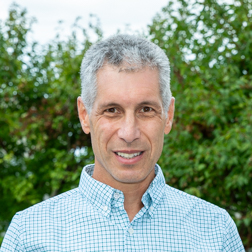
Paul Feffer, PhD
Science Department Chair
Physics · Computer Science · Robotics
BS, Physics, Stanford University · PhD, Physics, UC Berkeley
Read bio
Dr. Paul Feffer earned his doctorate in physics at UC Berkeley studying x-ray and gamma-ray emissions from the Sun, Galactic Center, and other astronomical objects, using data collected with balloon-borne instrumentation flown over Antarctica as well as satellite instruments. After a decade in the technology and finance industries, he returned to academia in 2013, joining Storm King to teach physics and computer science. He advises the robotics team, supports science competitions, and organizes weekend camping, skiing, and observational astronomy. As chair, he leads professional development workshops in physics and computer science across the New York City region.
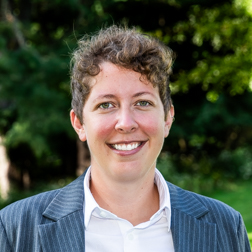
Nicole Cervantes, EdD
Science Teacher
Athletic Director · Head of Summer Programs
EdD, University of Missouri · MS, East Stroudsburg University · BA, Franklin Pierce University
Read bio
Dr. Cervantes holds an EdD in Educational Leadership and Policy Analysis from the University of Missouri, an MS in Sports Management from East Stroudsburg University, and a BA in Mass Communications from Franklin Pierce University. Before Storm King she served as Director of Athletics and Student Leadership at The Academy of Penguin Hall and coached at George Washington University. Her goal is to be a role model for her students — pushing them to excel in the classroom as well as on the court. She lives on campus in the SKS Art Center with her wife, Kandice, their children, and their dog.
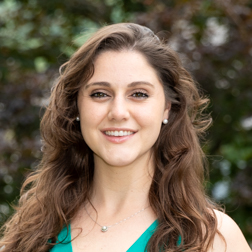
Jennifer Boerke
Science Teacher
Associate Director of Admissions · Cross Country Coach
BS, Political Science, Fordham University
Read bio
Jennifer Boerke graduated from Fordham University, where she competed in sprints and hurdles on the track and field team. Before arriving at Storm King she spent three years teaching Special Education in New York City, serving 9th and 11th grade students, and coached at Saint Thomas Aquinas College. She has taught civic action and engagement through the educational non-profit Generation Citizen.

Isabella Franco
Math & Science Teacher
Read bio
Ms. Franco joins the Storm King mathematics and science faculty this year. Full profile coming soon.
Every course, every department, one program.
Explore All Academics