
Department 01 — of 07
Mathematics.
A sequence with no ceiling — from first algebra to multivariable calculus.
Overview
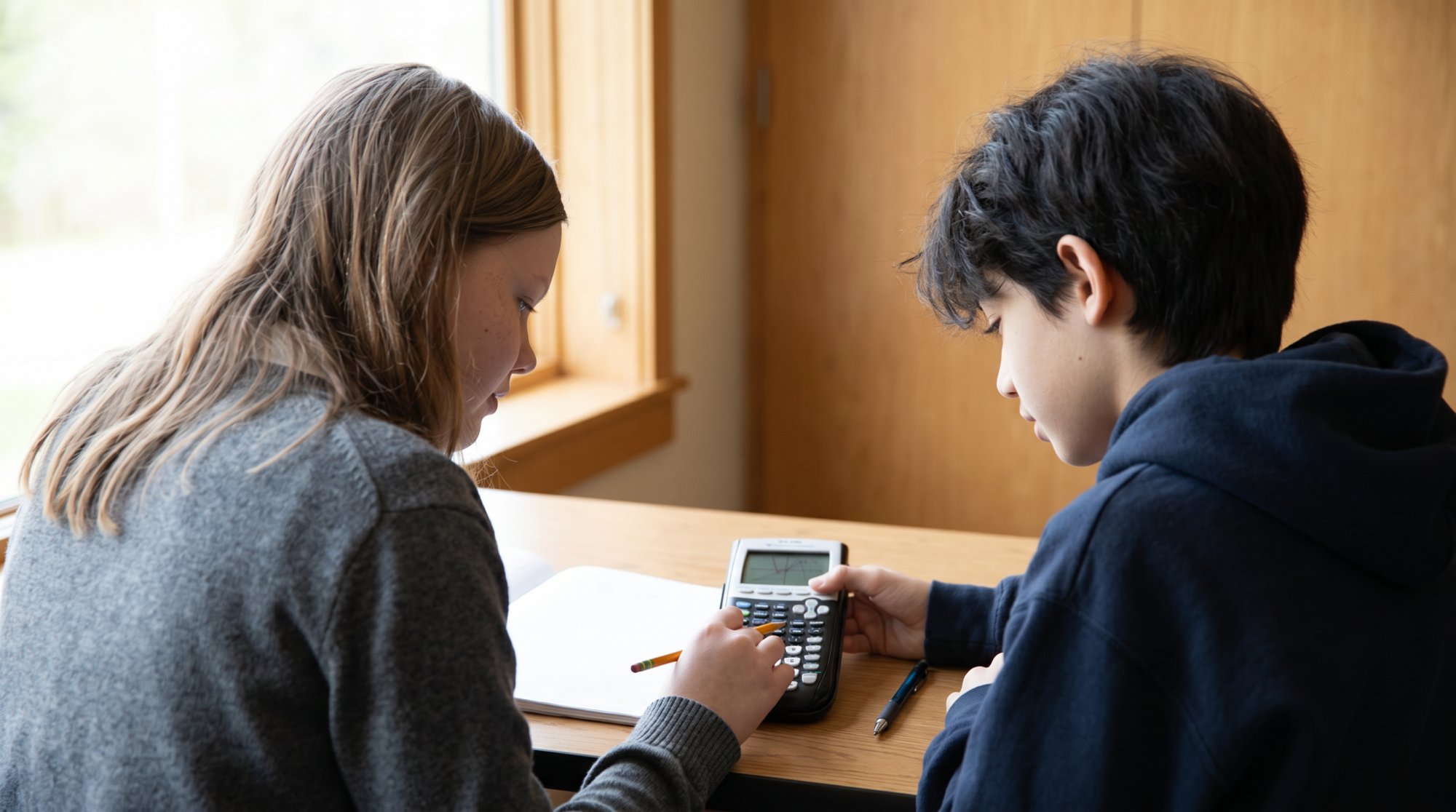
Mathematics at Storm King is a sequence with no ceiling. Students are placed — carefully, after thorough evaluation — at the level where challenge meets confidence, and then they climb: Algebra to Geometry to Precalculus, up through Calculus and AP, and onward into territory most high schools never reach, from multivariable calculus to group and number theory. Along the way, students learn to work the way mathematicians work: solving problems through an assortment of strategies, communicating their reasoning clearly, collaborating on projects with peers, and putting technology to intelligent use.
Placement is individual. Many first-year students begin with Algebra Skills in the eighth grade and Algebra I in the ninth before moving on to Algebra II; Geometry must be completed prior to any advanced mathematics course, such as Precalculus or Calculus.
Courses
Algebra Skills Grade 8
Algebra Skills is an eighth grade math option for students, reviewing basic fundamental concepts in order to succeed in high school math. Topics include but are not limited to orders of operation, algebraic manipulation, exponent rules, algebraic inequalities, factoring, the quadratic formula, and introduction to complex numbers.
Algebra I
Algebra I is the foundational high school mathematics course. It is the connection between the concrete to the abstract study of mathematics. Topics include simplifying expressions, evaluating and solving equations and inequalities, and graphing linear and quadratic functions, relations, and equations. Real world applications are presented within the course content.
Geometry
This course includes an in-depth analysis of plane, solid, and coordinate geometry as they relate to diverse mathematical concepts. Topics include logic and proof, parallel lines, polygons, perimeter and area analysis, similarity and congruence, and applications to real life situations. Emphasis will be placed on developing critical thinking skills as they relate to logical reasoning and argument. Students will be required to use different types of reasoning and explanation to discover much of the course content. Additionally, students will be required to construct project material outside of the classroom. The nature of the course is designed to expand the students’ ability in explaining the steps they took to solve a problem.
Algebra II
Basic mathematical skills and the logical approach they teach are essential to a student’s ability to interpret data and gain predictive and generalized meaning from raw observation. Mastery of these basic skills will give the student the confidence and desire to investigate the world of higher math. Students will expand skills learned in Algebra and will study higher-level skills such as rational expressions, radical equations, imaginary numbers, solving quadratics, transforming functions, and conic sections. Algebra II is the prerequisite to Precalculus.
Precalculus
Topics in Precalculus include advanced subjects in algebra, geometry, trigonometry, and other areas of mathematics. In addition to forming the foundation for the study of calculus, the topics covered in this class have wide-ranging applications in science, art, engineering, architecture, navigation, and many other areas. Literally “measuring triangles,” trigonometry builds on foundations of geometry and algebra to form powerful tools of analysis and modeling. Developed independently in several cultures, trigonometry most likely provided tools to astronomers and engineers of the ancient world. Today, its applications range from astrophysics to acoustics, spanning across virtually every field of science and engineering. From exponential to power functions, logistic functions to sinusoids, this course will give students the tools they need to analyze a function in a multiple of ways. We will be using a graphing calculator heavily in this course. Precalculus is the prerequisite for Calculus, AP Calculus and AP Statistics.
Calculus
Typically, a junior or senior level class, regular calculus covers many of the same topics covered on the AP AB Exam, at a different pace. We cover limits and continuity, limit definition of derivative, product, quotient and chain rules, logarithmic differentiation and implicit differentiation. From there we look at typical applications of differentiation such as curve sketching, optimization, related rates and Newton’s Method. For the remainder of the time, we delve into several methods of integration, from basic substitution through parts, partial fractions and trigonometric integrals. The successful completion of this course has a student well-prepared for both AP Calculus and college calculus. Prerequisite: Precalculus
AP Calculus AB AP
AP Calculus is a traditional first-year, college level course with performance standards established by the College Board. Since these standards are very demanding for most high school students, the course is designed for those students who have demonstrated excellent mathematical abilities in the classroom through Precalculus. As a discipline, calculus is where the student makes the “jump” from the static world to the dynamic world. No longer is the focus on “how much” we have, but on “how fast is it changing.” Are things getting better or worse? Are things getting bigger or smaller? This subtle but profound change in the questions asked by great thinkers resulted in the development of Calculus, one of the most important accomplishments of humanity. This is the course in which the student begins to understand the mathematical tools needed to make the world from the industrial revolution onward possible. The AP Calculus course requires a “B-” or higher in Precalculus. This is a demanding course, and students should expect to have 4-5 hours of homework per week. Prerequisite: Precalculus (Bgrade or higher)
Honors Calculus/AP Calculus BC AP
AP Calculus BC is a college-level, year-long course equivalent to two semesters of calculus (Calculus I and II). It will take place over two semesters; Honors Calculus in the fall and AP Calculus BC in the spring. It covers all AP Calculus AB topics, namely limits, derivatives, and integrals, while extending to advanced techniques like integration by parts, Taylor series, parametric, polar, and vector-valued functions. The curriculum emphasized applying concepts analytically, numerically, graphically, and verbally.
AP Statistics AP
AP Statistics is an introductory college-level course with performance standards established by the College Board. Since these standards are very demanding for most high school students, the course is designed for those students who have demonstrated excellent mathematical and verbal abilities in the classroom. As a discipline, statistics is often where the student evolves from analyzing the idealized mathematical world to understanding the ambiguity of the real world. Answers are no longer clear-cut, and data is often of dubious quality. Nevertheless, unless we wish to resort to opinion and speculation, the data can still be used, but it must be used correctly. Statistical methods, therefore, emphasize the interpretation of data and recognition of its limitations. AP Statistics is a demanding course, and the students should expect to have 4-5 hours of homework per week. Prerequisite: Precalculus
Advanced Calculus Post-AP
Advanced Calculus is one of our most advanced mathematics classes. It covers everything typically covered in the first two semesters of college calculus. It begins with a formal definition of limits and continuity, followed by all derivatives and rules, and applications including optimization, related rates, curve sketching, L’Hopital’s Rule and Newton’s Method. It then turns to integration, covering several methods such as parts, partial fractions, trigonometric integrals, trigonometric substitutions, rationalizing substitutions and improper integrals. Finally, it thoroughly covers series, from convergence tests like the nth term test, integral test, limit and direct comparison tests, ratio and root tests, followed by a good overview of power series and, finally, Taylor and Maclurin Series. A successful student is well-prepared to take the AP Calculus BC test.
Multivariable Calculus Post-AP
This course follows the syllabus of a typical college sophomore-level multivariable class. It begins with vectors, inner and outer products, and unit basis vector format, followed by vector calculus, including differentiation and integration, arc length, surface area, and Lagrange Multipliers. Later, it progresses to multiple integrals, coordinate changes including polar, cylindrical, and spherical coordinates, and the Jacobian for change of variables. Finally, if time allows, the semester concludes with line integrals, Green’s Theorem, Stoke’s Theorem, and the Divergence Theorem.
Advanced Topics in Mathematics Post-AP
Advanced Topics is the most advanced mathematics course offered at The Storm King School. Offered to seniors who have already completed the Advanced Placement curriculum, it seeks to offer students a window into more advanced mathematics and train them as Peer Tutors to work in Study Hall. The typical week is evenly split between an overview of what the lower-level math classes are covering, to be well prepared to work in Study Hall, and advanced math. The topics covered include multivariable calculus, linear algebra, and classical algebra including basic group theory and number theory, ending with forays into complex analysis and manifold theory.
Faculty
Alanna Rosenthal
Mathematics Department Chair
Upper-Level Mathematics · Calculus · AP Calculus
BA, Mathematics, Rutgers University
Read bio
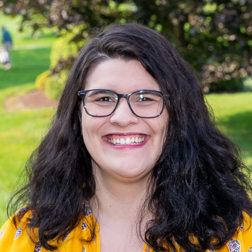
After earning her bachelor's degree in Mathematics from Rutgers University — with a minor in Theater Arts — Alanna Rosenthal gained experience in tutoring and mentorship before joining Storm King to teach upper-level math, including Calculus and AP Calculus. In her free time, she can be found bent over her sewing machine, crocheting her next amigurumi friend, or enjoying a good musical soundtrack.

James Bennett
Math Teacher
Assistant Dean of Academics
BA, Mathematics, Gettysburg College
Read bio
Mr. Bennett graduated from Gettysburg College with a Bachelor of Arts in Mathematics, where he played four years of college football. Originally from southern New Jersey, he is in his fifth year at The Storm King School, teaching mathematics and serving in the Dean's office. Outside his active life on campus, Jim enjoys hiking, coaching, and golf — but most of all, spending time with his dog, Chevy. He is a firm believer in the School's motto, “Truth, Respect, Responsibility,” and works to instill those values in each of his students.
Paul Feffer, PhD
Science Department Chair
Physics · Computer Science · Robotics
BS, Physics, Stanford University · PhD, Physics, UC Berkeley
Read bio
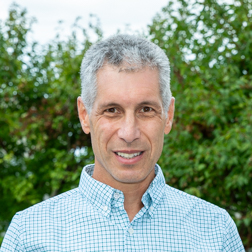
Dr. Paul Feffer earned his doctorate in physics at UC Berkeley studying x-ray and gamma-ray emissions from the Sun, Galactic Center, and other astronomical objects, using data collected with balloon-borne instrumentation flown over Antarctica as well as satellite instruments. After a decade in the technology and finance industries, he returned to academia in 2013, joining Storm King to teach physics and computer science. He advises the robotics team, supports science competitions, and organizes weekend camping, skiing, and observational astronomy. As chair, he leads professional development workshops in physics and computer science across the New York City region.
Rushdi Siddiqui, Esq.
Math & Social Sciences Teacher
BS, New York University · MBA, Baruch College · JD, Albany Law School
Read bio
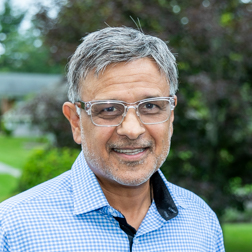
Rushdi Siddiqui joins the Storm King faculty after 25 years working and traveling across the globe with Fortune 500 companies, startups, and nonprofits — teaching, consulting, mentoring, and writing along the way. Career highlights include founding the non-profit Children with Cleft, advisory roles with Dow Jones Indexes and Thomson Reuters, and founding membership of Dubai Bank. He has presented at more than 200 conferences, given over 300 media interviews, and received more than 30 international awards. An avid tennis player and golfer, he is married with two adult children.
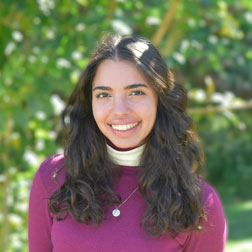
Isabella Franco
Math & Science Teacher
Read bio
Ms. Franco joins the Storm King mathematics and science faculty this year. Full profile coming soon.
Every course, every department, one program.
Explore All Academics