
Department 03 — of 07
History &
Social Sciences.
Informed, perceptive, engaged — citizens of their communities and the world.
Overview
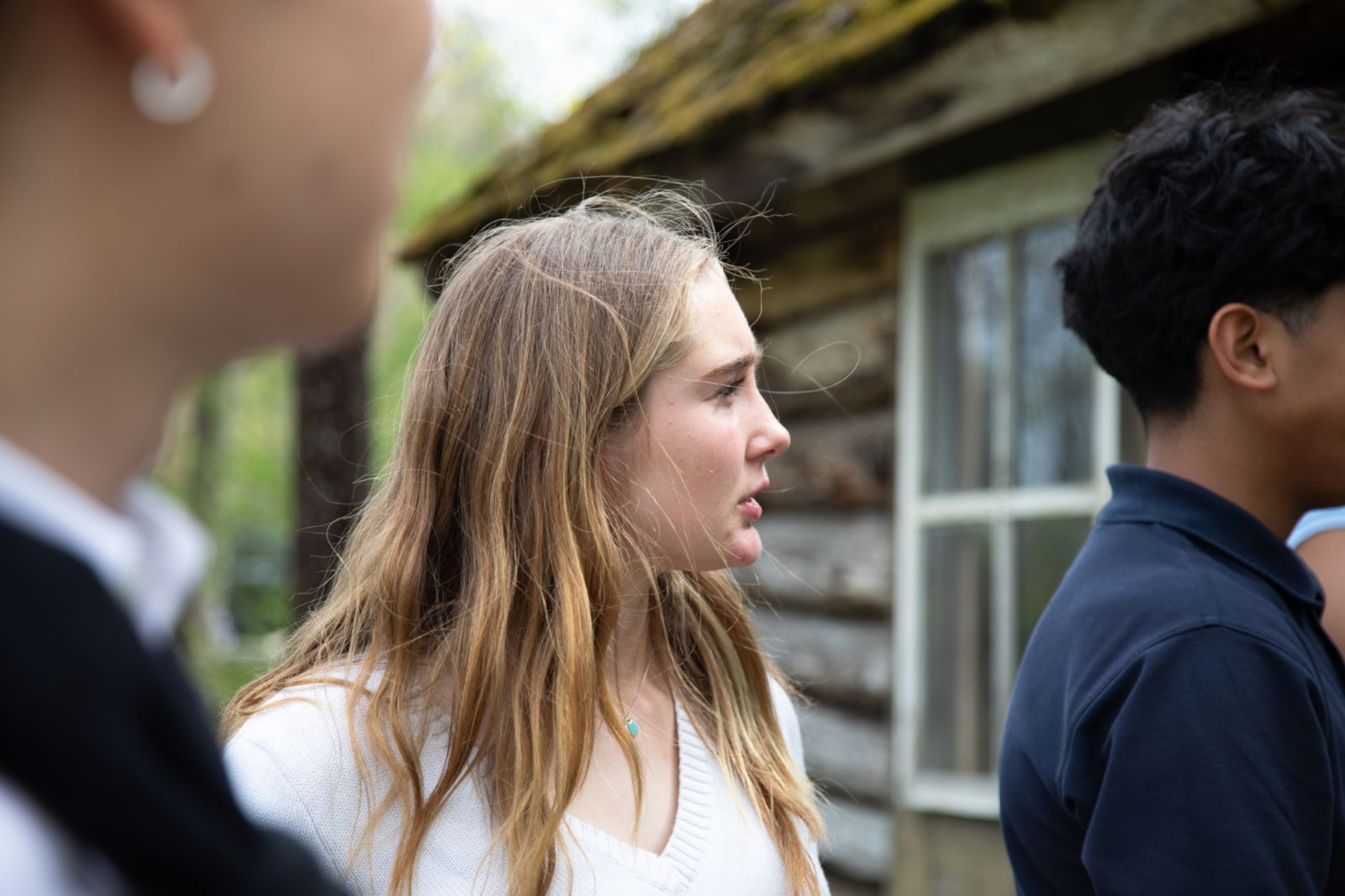
History at Storm King trains citizens, not spectators. Students study the peoples, cultures, and events that shaped human history — the struggles and the triumphs, what has divided people and what has united them — and learn to read the present the way historians read the past: with evidence, perspective, and healthy skepticism. The range here is unusual for a school of any size: four Advanced Placement courses, a law class that ends in a moot court before a panel of judges, economics from personal finance to global markets, and electives reaching from philosophy to the place where Wall Street, Washington, and Silicon Valley intersect.
The Hudson Valley itself is part of the syllabus. Courses make regular use of the School's historic surroundings — Washington's Headquarters, West Point, the FDR Museum, Fort Montgomery, and Black Rock Forest among them.
Courses
8th Grade Hudson Valley Studies: An Experiential Journey Through Science and History Grade 8
This dynamic course integrates Earth Science and Hudson Valley regional history through hands-on exploration. Students examine how the region’s geological features, river location, and natural resources shaped human settlement—from the Lenape people through European colonization, the Revolutionary War, and the Industrial Revolution—while uniting scientific observation with historical inquiry. Through field experiences at sites including Washington's Headquarters in Newburgh, local watersheds, the Hudson Highlands, Revolutionary War fortifications, and historic industrial locations, students connect landscape to history. They study how plate tectonics formed the Hudson Highlands; how Hudson River clay deposits fueled the 19th-century brick industry; how watersheds and the water cycle shaped settlement and mill sites; and how energy resources drove development from water-powered mills to Edison’s first electrical power plant. Through observation, analysis, and experimentation, students build critical thinking skills and understand how Earth’s systems and human history are deeply interconnected. This place-based approach turns the region into a living laboratory where geology, geography, ecology, and history reveal how natural forces and human ingenuity continue to shape our world.
Middle School History Grade 8
Middle School History explores physical and human geography around the world. The course is divided into two sections. In the first, we examine general principles of geography, including weather and climate, natural resources, and the dynamics of population. In the second section, we explore the geography of specific regions across the globe. We will focus on human-environmental interaction, challenging our students to reflect on some of the current, real-life crises in each region and develop sustainable solutions. Our course also examines the geography and history of our local region, the New York Hudson Highlands. Throughout the course, students are introduced to key social studies skills, such as map and chart analysis, data presentation and interpretation, and critical thinking.
Global Studies History I
In this required ninth grade course, students explore the cultures and history of people across the globe, from the beginning of human development through ancient civilizations and the Middle Ages. By understanding the common struggles and achievements of past peoples, students better understand the shortcomings and successes of our current age. Along with studying history chronologically, we will focus on several themes that have impacted the course of human culture and civilization, including colonization and empire-building, different political systems, and technology. We will also look at many of the more day-to-day aspects of life such as family, religion, and food that have changed over time.
US Studies History
Offered to tenth graders, this course will review the important events and key issues related to US history. Topics covered include the birth of the new nation, the Civil War, diversity and equality, government, and foreign policy. The Storm King School takes advantage of its historical location along the iconic Hudson River to further the students’ exploration of history with resources such as the Black Rock Forest Preserve, USMA at West Point, the FDR Museum, Washington’s Headquarters, Fort Montgomery, and many others.
Honors US Studies History Honors
Honors United States history is a thematic examination of the important events in United States History for tenth grade students. Students explore essential questions in depth such as “What is the role of government?”, “How does a country become a great power?”, and “How can equal rights be guaranteed for all?” Through their studies, students connect key terms and deepen their understanding of history. The area of content serves as an avenue to improve in important skill areas. Students assess their strengths and weaknesses and work to improve in reading comprehension, critical thinking, and analysis, writing, individual and group work, all in preparation for the rigors of college work in the social sciences.
Global Studies History II
This elective course offers eleventh and twelfth grade students the opportunity to continue their study of World History after having taken the required 9th grade Global Studies History I class. Students will continue to strengthen skills such as interpretation, analysis, and evaluation of primary and secondary sources: both textual and visual. Students will make connections between different time periods, discussing and defending historical arguments effectively through presentation and written skills. The area of content will begin around the year 1,200 CE, and include the cultural, economic, political, and social developments that have shaped the world from that time period onward.
AP World History AP
AP World History is a challenging, college-level course that explores key developments and interactions across global regions from approximately 1200 CE to the present. The curriculum is organized into nine historical units and examines overarching themes, including humans and the environment, cultural developments, governance, economic systems, social structures, technology, and globalization. Students will analyze primary and secondary sources, construct evidencebased arguments, and develop critical thinking and writing skills. The course emphasizes historical reasoning processes, such as comparison, causation, and continuity and change over time, to foster a deeper understanding of world history’s complexities. AP World History requires a significant commitment to reading, analytical writing, and preparation for the AP exam. A strong background in global studies and welldeveloped study habits are recommended for success in this rigorous course.
AP US History AP
The AP US History course is an intensive semester-long program designed for students preparing to take the AP U.S. History exam at the end of the course. It follows the AP curriculum, exploring nine historical time periods through seven overarching themes. This course demands a rigorous reading schedule and strong study skills, building on the foundation provided by the required 10th-grade U.S. History course. A solid background in U.S. Studies and/or the Social Sciences is highly recommended. Success in this course requires excellent study habits, a high level of motivation, and a commitment to mastering key skills such as reading, source analysis, information acquisition, and writing.
AP US Government & Politics AP
AP US Government and Politics provides a college-level, nonpartisan introduction to key political concepts, ideas, institutions, policies, interactions, roles, and behaviors that characterize the constitutional system and political culture of the United States. Students will study U.S. foundational documents, Supreme Court decisions, and other texts and visuals to gain an understanding of the relationships and interactions among political institutions, processes, and behaviors. Underpinning the required content of the course are several big ideas that allow students to create meaningful connections among concepts throughout the course. Students will also engage in skill development that requires them to read and interpret data, make comparisons and applications, and develop evidence-based arguments. In addition, they will complete a political science research or applied civics project.
AP African American Studies: History AP
This course is an intensive, college-level history class designed to prepare students for the AP African American Studies exam recently created by College Board. Through a chronological and interdisciplinary approach, students will explore the rich and diverse experiences of African Americans, from the origins of the African diaspora to the modern-day struggles and triumphs of the Black community. The curriculum is organized into four key units: Origins of the African Diaspora (~900 BCE–16th century), Freedom, Enslavement, and Resistance (16th century–1865), The Practice of Freedom (1865–1940s), and Movements and Debates (1940s–2000s): Students will develop skills in source analysis, historical reasoning, and argumentation while engaging with a wide range of materials, including historical documents, literature, art, and data. This course emphasizes critical thinking, interdisciplinary analysis, and a deep understanding of African American history’s contributions to shaping the United States and the world. Strong reading, writing, and study habits are essential for success in this rigorous and rewarding course. writing will be at a significantly higher level in the Advanced Psychology class. Students have the option of taking the AP exam.
Comparative Government
This course examines American as well as other government systems and ideas of government, and justice systems around the world; not only from a traditional teaching perspective, but also from the knowledge of students who come from other countries explaining their cultures. The class spends quite a bit of time on different constitutions, but pays particular attention to the American Constitution. Students are eager to act as members of the “Supreme Court,” assessing whether or not they come to the same decisions and why.
Introduction to Law
Students taking Introduction to Law will explore the foundations of the American legal field, as well as develop strong oral and written advocacy skills. The course concentrates on four pillars: constitutional law, torts, contracts, and criminal law. A shorter unit will cover other key legal subjects, such as property law, administrative law, and international law. Students will learn primarily by reading and discussing actual court cases; discussions will employ the Socratic method of question and answer that is used extensively in law school. In addition, students will learn how to prepare briefs and form oral arguments. The course will conclude with a moot court simulation, where students will have the opportunity to argue a complex legal case in front of a panel of judges. Beyond giving interested students an understanding of the legal field as a possible profession, the course is designed to help all students become more informed citizens and foster their ability to use advocacy and logical reasoning to address current problems.
International Relations
Students taking International Relations will be provided with a framework for studying the complexities of timely international and historic issues while examining United States foreign policy. In this course, students will pay close attention to current events, global problems, and their historical context. They will be expected to participate in regularly held discussions, debates, and simulations related to international relations. Students will examine the issues from historical, cultural, and political perspectives by actively reading current scholarship on each topic. Ultimately, students will develop their own views on the topics and sharpen their skills at forming persuasive and logical arguments that express those positions. Multiple units culminate with a role play activity that could include a Congressional hearing, a meeting of the National Security Council, or an election campaign forum. Units covered include: The United Nations, The Role of the US in a Changing World, Genocide, Climate Change, China, Russia, and the Middle East. Throughout the course, the ‘4 Cs’ will be emphasized: Communication, Collaboration, Critical Thinking, and Creativity. Students interested in participating in our Model UN Club may find particular interest in this course.
Psychology/Advanced Psychology
Psychology is a field of study with a wide range of applications. This course is designed to introduce students to the core principles of the discipline. It will provide a framework for the exploration of a variety of topics including but not limited to social influences on human behavior, the causes and treatments of various mental illnesses, personality traits and their roots in our development, and the long-term impact of prolonged stress. Students will have the opportunity to engage in cooperative projects wherein they will design and conduct their own psychological experiments using techniques they learn in class. By the end of the semester, students who take this course will be able to create detailed diagrams of the brain, recognize the stages of general adaptation syndrome in their own stress response, apply attribution theory in their daily lives, and much more. Advanced Psychology uses the David Myers AP textbook. The pace, number of topics, quantity of reading, and writing will be at a significantly higher level in the Advanced Psychology class. Students have the option of taking the AP exam.
Advanced Philosophy Advanced
Advanced Philosophy is a foundational course that invites students to explore the major branches and methods of philosophical inquiry, encouraging critical thinking, ethical analysis, and the pursuit of wisdom. Through diverse philosophical traditions and thought experiments, students will confront timeless questions about knowledge, reality, ethics, and the nature of society. The course incorporates key Western philosophical traditions, applied ethical debates, and an introduction to Eastern philosophical perspectives, giving students a well-rounded view of global philosophical thought. This course fosters logical reasoning skills, awareness of ethical principles, and an appreciation for the complexity of human thought and morality.
Introduction to Economics
Economics is designed as a comprehensive exploration of how individuals, businesses, and governments make choices in a world of limited resources. This course blends three critical areas—microeconomics, macroeconomics, and personal finance & business—to give students a holistic understanding of economic systems and decision-making. By weaving these strands together, students will see how personal choices connect to larger market forces and how both shape the financial well-being of individuals and societies. Microeconomics asks questions such as: How do consumers decide what to buy? Why do businesses set prices the way they do? What role does competition play in shaping markets? Macroeconomics expands the lens to consider issues like: What causes inflation and unemployment? How do governments use policies to stabilize economies? What factors drive long-term growth? Personal finance and business bring these concepts into everyday life, tackling questions like: Where do I deploy my income? How much towards Spending, Savings, Investments, listed companies to startups, etc. By the end of the course, students will gain the ability to analyze economic problems from multiple perspectives, apply financial literacy skills to their own lives, and understand the interconnectedness of local and global economies. They will learn to think critically about tradeoffs, evaluate the impact of policy decisions, and make informed choices about money, careers, and business opportunities. In addition, this course provides a strong foundation for students who wish to pursue advanced placement opportunities, specifically preparing them for success on the AP Microeconomics and AP Macroeconomics exams. Ultimately, it equips students not only for college-level study in economics or business but also for responsible citizenship and financial independence in the real world.
Microeconomics/Advanced Microeconomics
Microeconomics and Advanced Microeconomics are offered in alternating years. The course introduces the main principles and concepts of microeconomics. The study of microeconomics focuses on the actions and decisions of individuals, companies, and industries. A fundamental characteristic of this course is the occasional integration of concepts of macroeconomics as well in an effort to study economics holistically. Students will examine microeconomics from the viewpoint of consumers and investors. The course starts by gaining a better understanding of the fundamental philosophies and systems of economics followed by the principles of personal finance, supply and demand, business and labor, prices, inflation, investing, firms, markets, and entrepreneurialism. Throughout the course, students engage in projects that enhance their learning. For example, students participate in team projects on the stock market, entrepreneurialism, and business planning.
Macroeconomics/Advanced Macroeconomics
Macroeconomics and Advanced Macroeconomics are offered in alternating years. This course introduces the main principles and concepts of Keynesian macroeconomic theory. The study of macroeconomics focuses on the behavior and performance of an economy as a whole and the aggregate changes in an economy related to factors such as unemployment, growth rate, gross domestic product and inflation. Throughout the course, students engage in group work with their fellow classmates that enhances their learning. In addition to their theoretical study, students will examine macroeconomics from their viewpoint as global citizens interested in and participating in the global economy.
Economics: Personal Finance & Business
This course introduces the concepts of owning and operating a business, which include the rewards and challenges of entrepreneurship and the details of developing a successful business plan. Additional topics include major national and global influences on businesses, money and banking, the importance of marketing a product or service, human resources management, developing and retaining employees, financial management, as well as technology in the workplace. Students will also gain an understanding of managing their personal finances, career planning, making intelligent consumer decisions, the basics of credit in the marketplace, and the principles of risk management.
Sports Economics: Understanding the Business Behind the Game
Welcome to the World Where Sports Meets the Trifecta of Economics, Finance & Business. As a high school student-athlete, you already know the thrill of competition and the dedication it takes to succeed. But did you know that sports is also one of the largest industries in the world, worth trillions of dollars? This course invites you to step beyond the field or court and explore the powerful business engine behind the games you love. From athlete contracts to stadium deals, ticket pricing to media rights, you’ll learn how economics, finance, and business shape every aspect of sports. Even if only a small percentage of athletes ever go professional, you can still build a career in sports—whether as an executive, agent, entrepreneur, or innovator—while staying connected to your passion. By the end of this course, you’ll take away a deeper understanding of how sports organizations make decisions, how money flows through leagues and teams, and how technology and media are transforming the fan experience. You’ll be able to apply these insights to real-world situations, like analyzing why your city debates building a new stadium, or understanding how sponsorships and endorsements impact athletes and brands. This knowledge will empower you to see sports not just as a game, but as a global ecosystem full of opportunities. Throughout the course, you will develop valuable skills that go far beyond athletics. You’ll sharpen your critical thinking by examining how different stakeholders—players, owners, fans, and cities—interact. You’ll strengthen your communication and teamwork abilities by discussing complex issues and presenting solutions. You’ll build financial literacy by learning how contracts, investments, and budgets work in sports. And you’ll grow your entrepreneurial mindset, preparing you to innovate in a field that thrives on creativity and passion. These skills will serve you whether you pursue a career in sports, business, or any other path where leadership and strategic thinking matter.
Startups, Sustainability, & Stewardship
The Startup, Sustainability & Stewardship course is for those driven students who aspire to change the world, at least in their corner, with their entrepreneurial ideas in the context of global trends like sustainability and/or stewardship. Today, young people all over the world want to have a say in their future. One pathway is via ideation led innovative startups. But students need a roadmap of the startup ecosystem–from Forming to Storming to Norming to Performing: the process will allow students to understand their entrepreneurial spirit and to answer the question, ‘Do I have what it takes to be a startup founder?’ The approach includes interactive lectures, case studies, and team (startup) projects all with the emphasis on engagement. Primary sources with real world examples are read and discussed. There is great emphasis on public speaking communication skills. In addition, students will also be able to hone in on research, analysis, suggestions, feedback, iterating and pivoting, and be able to engage in discussions with business-minded professionals.
The New World Order: Where Wall Street, Washington, and Silicon Valley Intersect
In the emerging architecture of global power, Wall Street, Washington, and Silicon Valley form a triad of influence that governs much of modern life. These three centers— finance, politics, and technology—no longer operate in silos. Instead, they function as an interwoven system where decisions in one domain ripple across the others, shaping everything from national security to consumer behavior. Wall Street fuels Silicon Valley through venture capital, IPOs, and mergers. Capital markets enable tech startups to scale rapidly, often with valuations untethered from traditional metrics. Investment banks underwrite IPOs for companies like Meta and Tesla, while hedge funds and private equity firms invest in AI, biotech, and quantum computing. This financial backing accelerates innovation—but also concentrates wealth and power. Washington regulates and subsidizes both sectors. Through legislation, tax policy, and defense contracts, the federal government sets the rules of engagement. Agencies like the SEC oversee Wall Street, while the Department of Defense funds startups working on dual-use technologies. Lobbyists from both sectors shape policy, producing a regulatory environment that often lags behind innovation yet remains deeply influenced by corporate agendas. Silicon Valley shapes public discourse and policy indirectly. Platforms like X (formerly Twitter), YouTube, and Facebook influence elections and public opinion. Algorithms determine what information people see, fostering echo chambers and polarization. Tech firms also collect vast amounts of data for commercial, political, and military use, giving them soft power that rivals traditional institutions. Together, these three centers form a self-reinforcing system: Wall Street provides capital, Silicon Valley builds the tools, and Washington sets the rules—often under the influence of both. This triad drives globalization, digitization, and financialization, blurring the boundaries between public and private, domestic and international.
Faculty
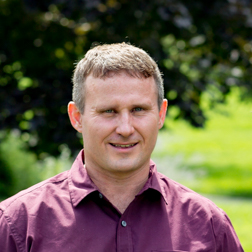
Tim Gillett
History & Social Sciences Chair
Interim Assistant Head of School for Academics · Dean of Faculty
BA, International Studies, Kenyon College · MA, American Studies, Trinity College
Read bio
Tim Gillett graduated from Kenyon College with a degree in International Studies and earned a Master's in American Studies from Trinity College. He began his career teaching English as a Second Language at La Alianza Hispana in Boston and then at Vanderbilt University, and in 2003 began his boarding school career at Avon Old Farms School, where he saw firsthand the transformative, holistic experience a boarding school can provide. Before arriving at Storm King in 2018, he took a career hiatus to fulfill a lifelong dream of trekking and biking around the world. During the summer months, Tim serves as an Academic Dean for The American School in Switzerland.
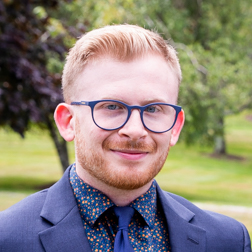
Daniel Constantinidi
History & Social Sciences Teacher
Director of College Counseling
BA, History, Albertus Magnus College · MA, Religion, Yale Divinity School
Read bio
Dan graduated from Albertus Magnus College with a degree in History and earned a Master of Arts in Religion from Yale Divinity School. He has worked at multiple colleges and universities in admissions, athletic recruiting, and the classroom. At Storm King, Dan has adopted an 8–12 college readiness plan — believing it is never too early to start focusing on goals after life on the Mountain — and guides students through every stage of the college process, from the initial search to the personal essay, final decisions, and financial aid. He also assists in coaching baseball, plays in the Hudson Valley National Adult Baseball Association, and lives on campus with his partner and their dog, Kona.
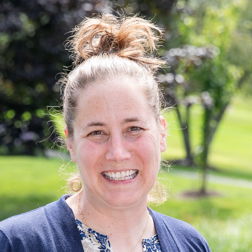
Sara Sandstrom
History & Social Sciences Teacher
Dean of Student Life
BA, History, UC San Diego · M.Ed., UMass Amherst
Read bio
Before joining Storm King, Sara built extensive residential-life experience at the collegiate level — five years at the University of Illinois Urbana-Champaign and seven at Smith College — and served eight years as Dean of Students and Director of Residence Life at Oakwood Friends School. Alongside her work in the Dean's Office she teaches Global History, coaches JV girls basketball, and serves as a dorm parent in Highmount House. In her free time she enjoys hiking, basketball, horse shows, reading, and podcasts.
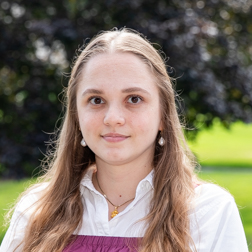
Courtney Sutter, JD
History & Social Sciences Teacher
Introduction to Law
BA, Humanities, CSU Chico · JD, McGeorge School of Law
Read bio
Courtney earned her BA in Humanities from California State University, Chico, with a focus on art history and foreign languages, and her Juris Doctor from Pacific McGeorge School of Law in 2016. She practiced in several fields of law, including insurance defense and construction litigation, before joining The Storm King School — where her students learn the law by arguing it.
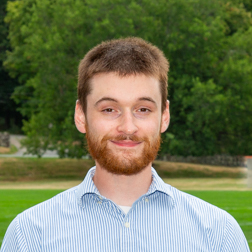
Patrick Fulton
Psychology & History Teacher
Girls Soccer · Ultimate Frisbee
BA, SUNY New Paltz
Read bio
Mr. Fulton graduated from SUNY New Paltz, where he majored in Performing Arts and minored in Political Science. He grew up in Cornwall-on-Hudson and has a long history with Storm King — performing in plays at The Walter Reade, Jr. Theatre from the age of eight. He teaches psychology and middle school history, still finds time to appear in SKS plays and musicals, and coaches Girls Soccer in the fall and Ultimate Frisbee in the spring.
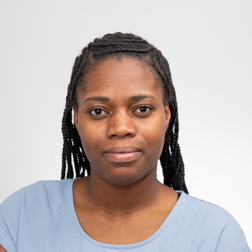
Djazmina Guerrier
History & Social Sciences Teacher
BA, Education & MA, Special Education, Dominican University
Read bio
Djazmina Guerrier holds a Bachelor's in Education and a Master's in Special Education from Dominican University. Her experience spans diverse groups of learners — ESL students, students with special needs, and general education populations, from preschool through high school — always with the goal of creating inclusive, engaging, meaningful classrooms. A track and field athlete from 7th grade through graduate school, she pushes her students to reach their full potential inside and outside the classroom.
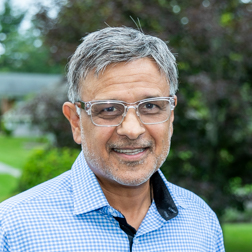
Rushdi Siddiqui, Esq.
History & Social Sciences Teacher
Economics · Global Business
BS, New York University · MBA, Baruch College · JD, Albany Law School
Read bio
Rushdi Siddiqui joins the Storm King faculty after 25 years working and traveling across the globe with Fortune 500 companies, startups, and nonprofits — teaching, consulting, mentoring, and writing along the way. Career highlights include founding the non-profit Children with Cleft, advisory roles with Dow Jones Indexes and Thomson Reuters, and founding membership of Dubai Bank. He has presented at more than 200 conferences, given over 300 media interviews, and received more than 30 international awards. An avid tennis player and golfer, he is married with two adult children.
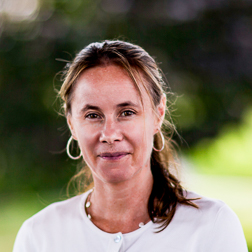
Lisa Shrem
History & Social Sciences Teacher
Co-Director, Community Service · Academic Support Program
M.Ed., Special Education, Hunter College
Read bio
Lisa Shrem has over 12 years of experience teaching a variety of subjects to students with learning differences using a differentiated approach, with extensive training in multi-sensory tactics, whole language, behavior modification, and Orton-Gillingham. She recently earned a Certificate in Learning Differences and Neurodiversity from Landmark College. Specializing in executive function disorders and learning disabilities, she also co-directs the School's community service program. Off campus, she enjoys time with her three children, running, and hiking with her dogs.
Every course, every department, one program.
Explore All Academics