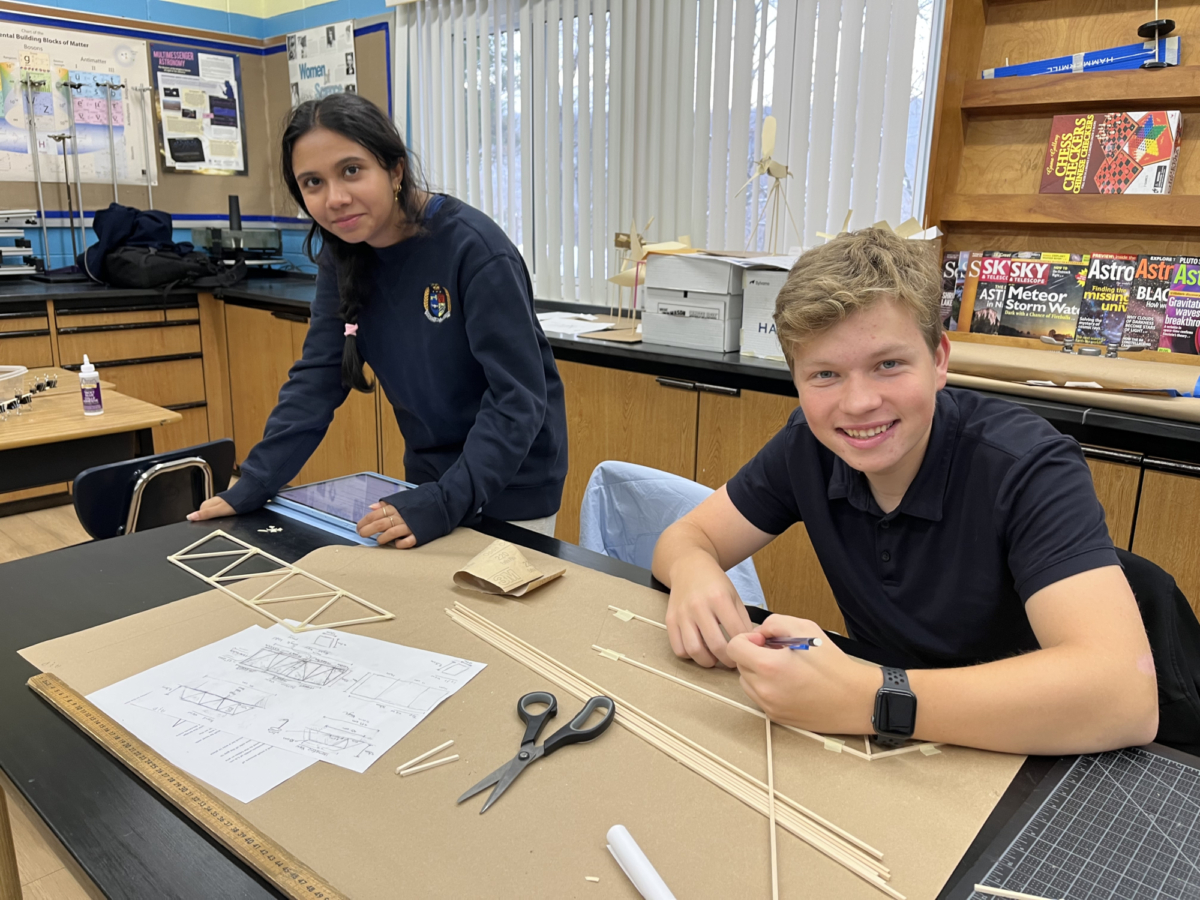
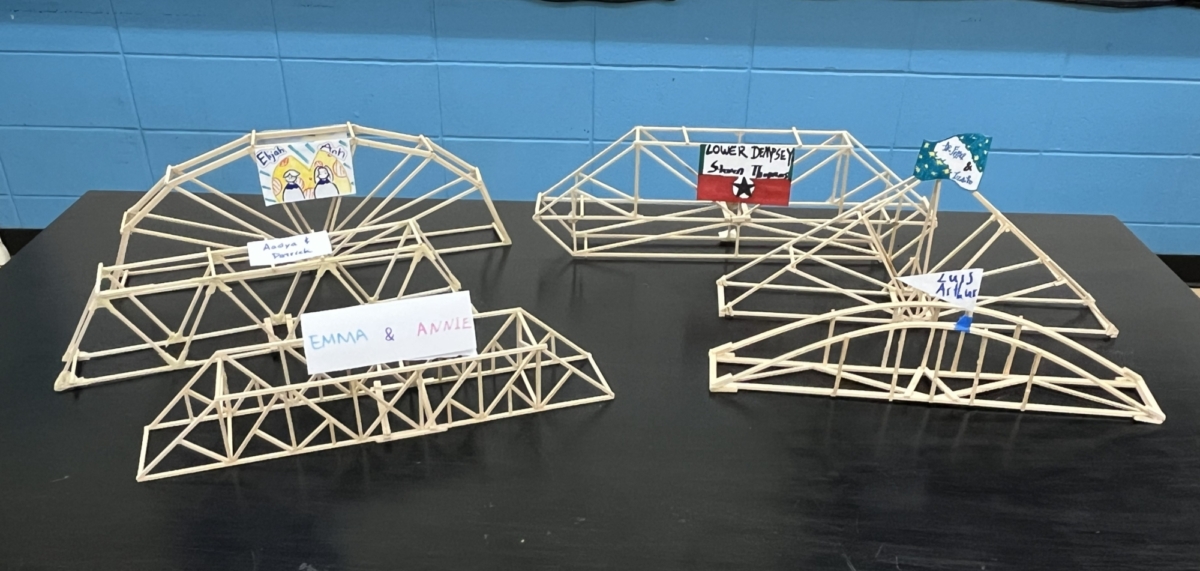
Students in Dr. Feffer’s Honors Physics course engaged in a bridge building competition recently that provided hands-on experience with concepts they were studying.
In small teams, the students designed and constructed free-standing bridges out of balsa wood following detailed competition guidelines. Each bridge was required to span a 40-centimeter gap, include a functional roadway with a specified width and height, and accommodate a testing apparatus. These constraints required careful consideration of structural design, force distribution, and efficient use of materials.
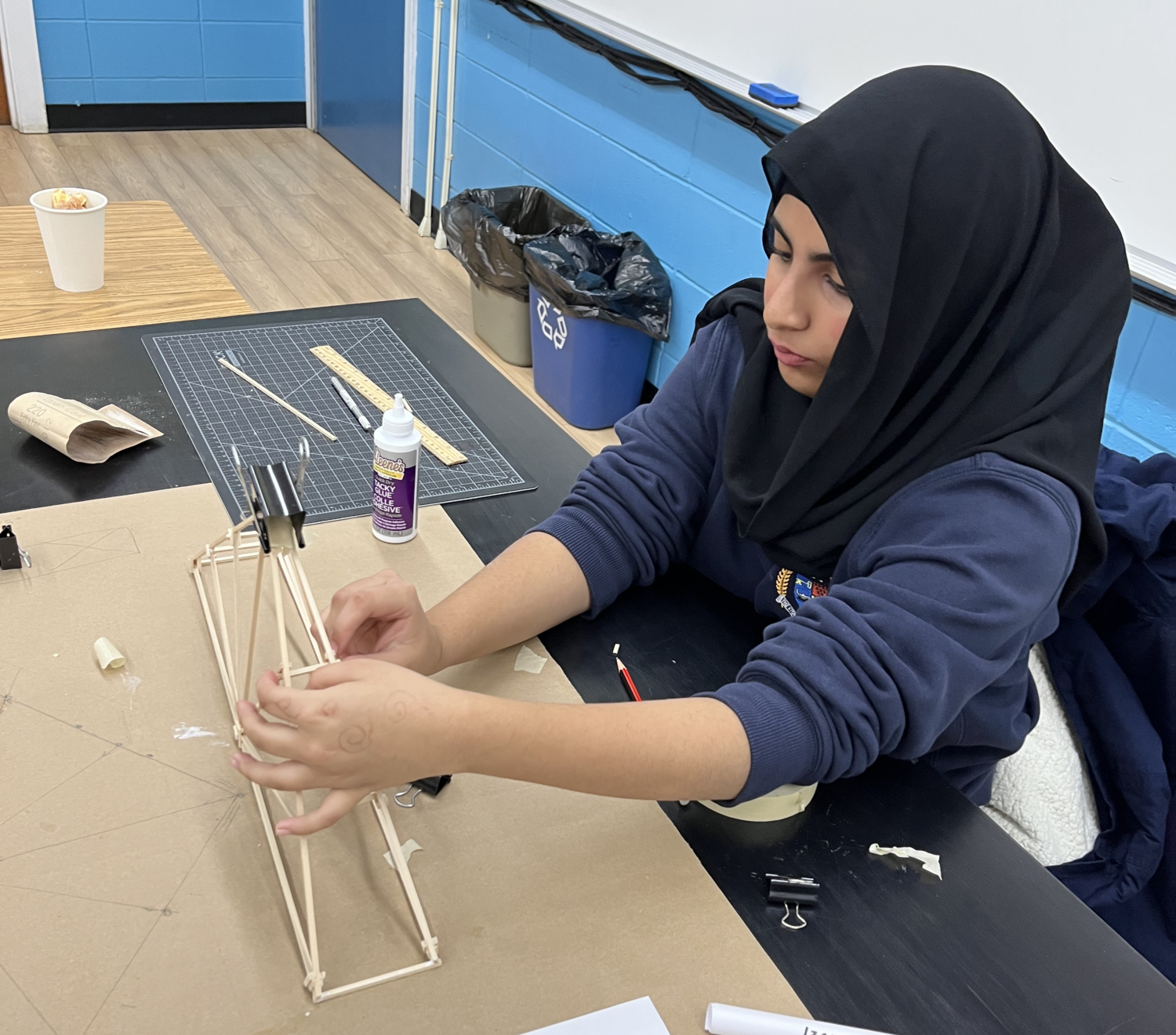
“Bridges are analyzed using principles of statics, a topic we covered in this physics course, where all forces sum to zero,” said Dr. Feffer. “This competition was a fun way to end the semester and give the students a tangible introduction to trusses, a structural concept studied in mechanical engineering.”
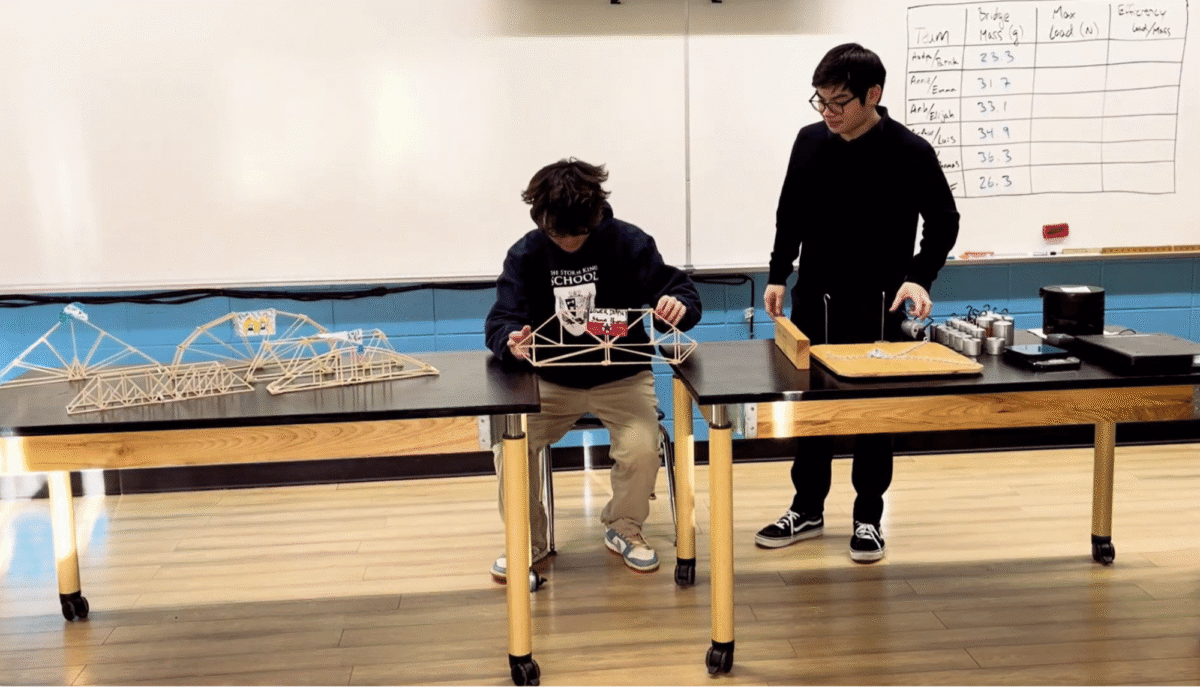
During the testing phase, completed bridges were weighed and placed across the gap between tables. Weight was gradually added at the center of each structure until failure occurred, allowing students to observe how forces acted on their designs and how they ultimately failed. Performance was evaluated using an efficiency calculation that compared the maximum load supported to the mass of the bridge, reinforcing the importance of well-planned, efficient design.
The bridge competition is a reflection of the broader academic goals of Honors Physics, the first half of AP Physics C: Mechanics. The course emphasizes calculus-based problem solving, laboratory investigation, and analytical reasoning in preparation for college level physics and engineering.
By combining rigorous academic study with experiential learning, the bridge building competition offered students a meaningful and engaging opportunity to put physics principles into practice while developing skills for future work in science and engineering.